Developers of Chicago Engineering Blog
Can the US battery market untangle from China?
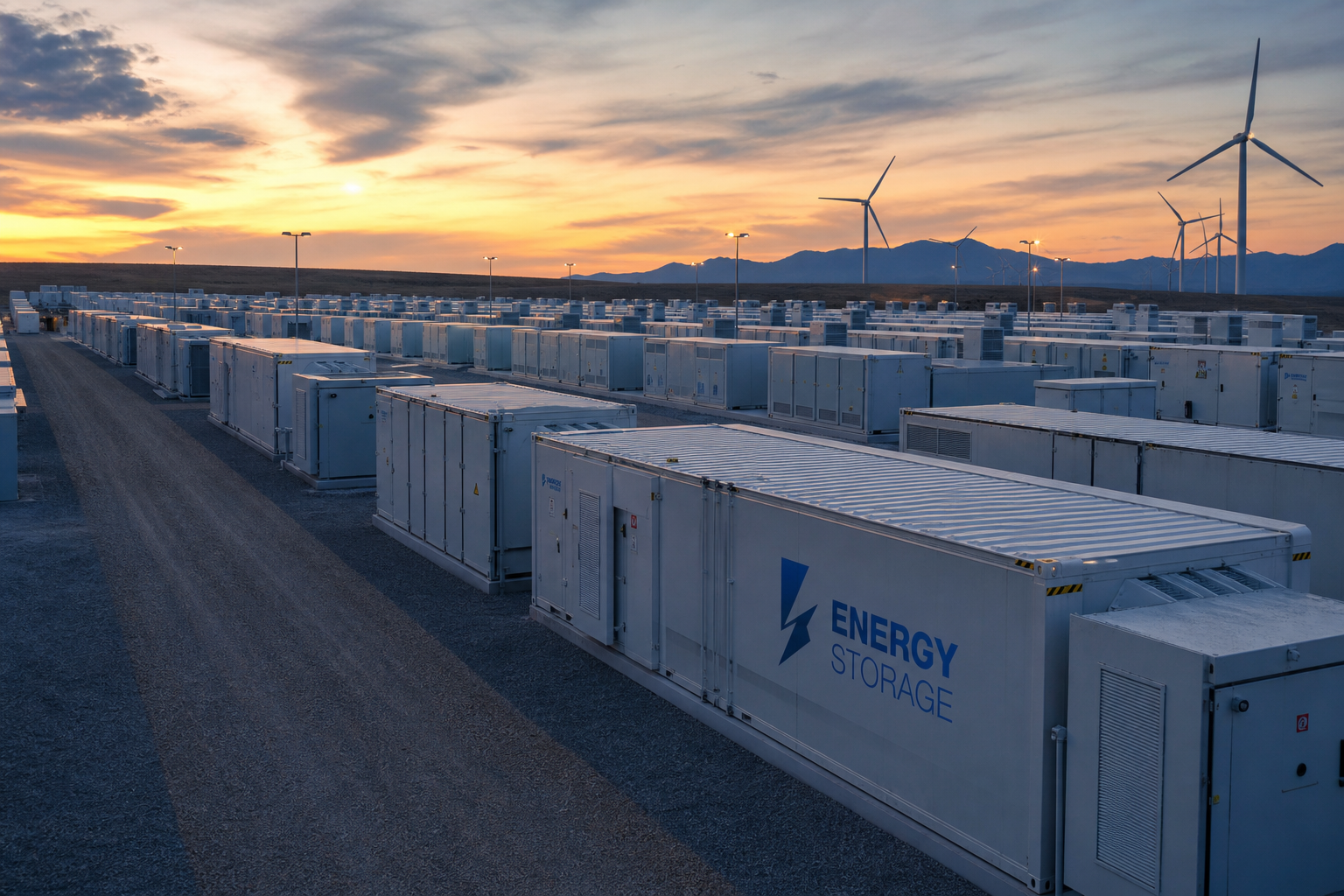
The modern digital economy relies on an invisible foundation: electrical power. As artificial intelligence applications explode and cloud computing demands reach unprecedented levels, the energy required to support this infrastructure has become one of the most critical challenges of our era. At the center of this challenge lies a massive buildout of utility-scale energy storage in the United States. Energy storage systems—primarily massive battery arrays—are being deployed at record speed to stabilize the power grid, prevent blackouts, and store renewable energy generated from wind and solar farms.
However, this clean energy boom hides a glaring supply chain vulnerability. The vast majority of the battery technology enabling this transformation is manufactured in China. As geopolitical tensions rise and the US government implements aggressive trade policies—including tariffs and tax credit restrictions—to incentivize domestic manufacturing, a fundamental question emerges: Can the US battery market actually untangle itself from China without stalling its clean energy goals and the AI revolution that depends on them?
Understanding this dynamic is vital for tech leaders, software engineers, product managers, and enterprise executives. The cost, availability, and reliability of hardware at the grid level directly dictate the economics of compute power, data center expansion, and the scalability of machine learning models worldwide.
What happened
The United States energy storage sector is experiencing unprecedented, exponential growth. In regions like California and Texas, grid operators have integrated thousands of megawatt-hours of battery capacity over the past few years, effectively preventing major outages during extreme weather events and peak summer demand periods. These battery installations act as colossal shock absorbers for the electrical grid, absorbing surplus solar power during the middle of the day and discharging it back into the grid when the sun sets and electricity demand peaks.
Yet, this rapid expansion has been built almost entirely on an supply chain rooted in Chinese manufacturing. Chinese battery giants control the majority of the global production capacity for stationary energy storage cells, as well as the refining pipelines for key raw materials like lithium, graphite, and synthetic active materials.
In response to this strategic dependency, the US government has enacted sweeping policy measures. Through the Inflation Reduction Act (IRA) and updated Section 301 tariffs, Washington has placed high duties on Chinese lithium-ion battery imports while offering lucrative tax incentives for energy projects built using domestically sourced components. The objective is to force a rapid decoupling and jumpstart an American battery manufacturing renaissance. However, the immediate reality is a growing friction point: domestic production facilities are taking years to build out, while cheap Chinese batteries remain the fastest and most cost-effective solution to meet the exploding demand for power.
Key details
To understand why untangling from China is so complex, one must look at the specific battery chemistry and supply chain dynamics driving the grid storage industry.
- LFP Dominance: Stationary energy storage has shifted heavily toward Lithium Iron Phosphate (LFP) chemistry, moving away from Nickel Manganese Cobalt (NMC). LFP batteries are safer, offer a longer cycle life, do not require cobalt or nickel, and are significantly cheaper to manufacture. However, Chinese manufacturers currently hold near-monopolistic control over LFP cell production and the underlying intellectual property.
- Scale and Cost Disparities: Industry giants like CATL, BYD, and Gotion operate gigafactories in China at scales that allow for massive economies of scale. The cost per kilowatt-hour (kWh) of Chinese-produced LFP cells dropped precipitously over recent years, making grid storage economically viable for private utilities and independent power producers. US domestic alternatives are currently sparser and carry a significant price premium.
- Raw Material Bottlenecks: Manufacturing a battery cell is only the final assembly step. The upstream processing—refining lithium carbonate, processing high-purity synthetic graphite for anodes, and producing precursor materials—remains overwhelmingly concentrated in East Asia. Even when battery cells are "Made in the USA," their refined chemical inputs often originate abroad.
- Policy Constraints: The IRA’s foreign entity of concern (FEOC) rules actively penalize projects that rely on Chinese supply chains for tax credits. Simultaneously, tariff increases on non-EV lithium-ion batteries threaten to push project costs higher, forcing developers to choose between paying steep import penalties or delaying projects until domestic production catches up.
Impact on the AI industry
While energy storage might seem like a utility-sector issue, its implications for the artificial intelligence landscape are profound and immediate. AI is fundamentally an energy-intensive technology. Training modern large language models (LLMs) and serving real-time inference requests to millions of end-users requires massive data center footprints running thousands of high-performance GPUs continuously.
The AI boom has effectively disrupted decades of flat US electricity demand. Hyperscalers—including Microsoft, Google, Amazon, and Meta—are searching for hundreds of megawatts of continuous, clean power to supply their next generation of data centers. Because these companies have committed to strict net-zero carbon goals, they cannot simply plug into coal or natural gas plants to meet this load. They depend heavily on renewable energy backed by large-scale battery storage to guarantee uninterrupted power.
If the US energy storage market faces supply constraints, cost inflation, or project delays due to rapid trade decoupling from China, several immediate impacts will ripple through the AI ecosystem:
- Data Center Bottlenecks: Delays in utility-scale battery deployments will slow down grid interconnection timelines for new data centers. If a regional grid operator cannot backstop solar and wind energy with battery storage, they cannot grant power permits to gigawatt-scale AI computing facilities.
- Rising Compute and Cloud Costs: Tariffs and domestic supply chain premiums increase the capital expenditures (CapEx) for renewable energy projects. Higher power purchasing agreement (PPA) prices for data center operators will inevitably translate into higher API costs, elevated cloud instance pricing, and increased enterprise expenses for training and running custom AI models.
- Shift Toward Alternative Power Models: Power scarcity is already forcing tech giants to explore alternative baseline power sources, such as small modular nuclear reactors (SMRs), geothermal energy, and direct microgrids. However, in the near term (1–3 years), stationary battery storage remains the only scalable technology capable of keeping up with AI’s energy demands.
What developers and businesses should know
For software teams, CTOs, and tech leaders, the shifting dynamics of energy hardware have practical operational implications. You cannot build scalable AI software without taking compute efficiency and infrastructure realities into account.
- Compute Efficiency is Now a Strategic Advantage: As energy costs rise and power delivery bottlenecks slow down data center expansion, writing efficient code is no longer optional. Engineering teams must focus on model optimization techniques—such as quantization, model distillation, and efficient inference serving—to reduce GPU cycles per query and minimize power consumption.
- Cloud Cost Volatility: Expect regional pricing disparities for cloud compute to broaden. Data centers situated in regions with abundant, cheap, and well-stored renewable energy will offer lower compute pricing compared to regions constrained by grid interconnect delays. Multi-region deployment strategies should account for local power availability and costs.
- Architecting for Sustainable AI: Corporate sustainability mandates are requiring IT departments to track the carbon footprint of their digital operations. Because grid reliability directly impacts the carbon intensity of data center electricity, monitoring green computing metrics will become a standard software engineering practice.
- Hardware and IoT Supply Chains: Businesses building hardware products that rely on advanced battery tech (such as edge AI devices, autonomous robotics, and remote sensors) should prepare for ongoing supply chain turbulence and component cost changes as trade policies shift.
Future outlook
Over the next 6 to 12 months, the US battery market will navigate a challenging transition period characterized by domestic building efforts and short-term supply friction.
In the near term, battery system costs in the US may experience temporary upward pressure as higher tariffs take effect before domestic gigafactories reach full operational capacity. While companies like Tesla (with its Megapack factory in California), LG Energy Solution, and several domestic startups are expanding US manufacturing, reaching complete supply chain independence from raw materials to finished cells will take years.
We will likely see increased policy adjustments and pragmatic trade exemptions designed to prevent energy grid stalls while encouraging local investments. Concurrently, innovation in non-lithium alternative chemistries—such as sodium-ion batteries, iron-flow batteries, and long-duration thermal storage—will accelerate rapidly. Sodium-ion technology, in particular, offers an attractive long-term alternative for stationary storage because it relies on cheap, globally abundant sodium rather than supply-constrained lithium.
Ultimately, the goal of untangling the US battery supply chain from China is achievable, but it will be a multi-year effort. In the meantime, the speed at which American grid storage expands will dictate how quickly US tech infrastructure can scale to meet the relentless compute demands of the AI revolution.
Conclusion
The intersection of clean energy hardware, international trade policy, and artificial intelligence infrastructure highlights a fundamental truth of modern technology: digital innovation cannot exist without physical infrastructure. The record expansion of the US energy storage market is essential for building a resilient, low-carbon power grid capable of driving the next era of automation, machine learning, and cloud computing.
While untangling from Chinese battery dominance poses real short-term supply challenges and cost pressures, it also creates unprecedented opportunities for domestic industrial innovation. For software engineers, business leaders, and technology architects, remaining aware of these infrastructure shifts is critical. By prioritizing energy efficiency, optimizing software systems, and adapting to changing compute economics, organizations can build resilient products designed for the modern digital landscape.
Build With Developers of Chicago
If this kind of AI capability matters to your product, you need a team that can actually ship it. Developers of Chicago helps startups and enterprises design, build, and deploy AI-powered software — from custom integrations to full-scale automation systems.
- AI Integration & Automation — Explore our AI services
- Custom Software Development — See our services
- Mobile App Development — Build with us
- Start a Project — Book a call
Based in Chicago. Building for clients everywhere.