Developers of Chicago Engineering Blog
AI Infrastructure: Why
For the past three years, the narrative surrounding artificial intelligence infrastructure was remarkably straightforward: whoever amassed the most GPUs won. Tech giants, venture-backed startups, and sovereign wealth funds entered a desperate bidding war for Nvidia’s elite H100 and A100 graphics processing units. Silicon was the ultimate bottleneck, and enterprise compute strategies lived and died by lead times from semiconductor foundries.
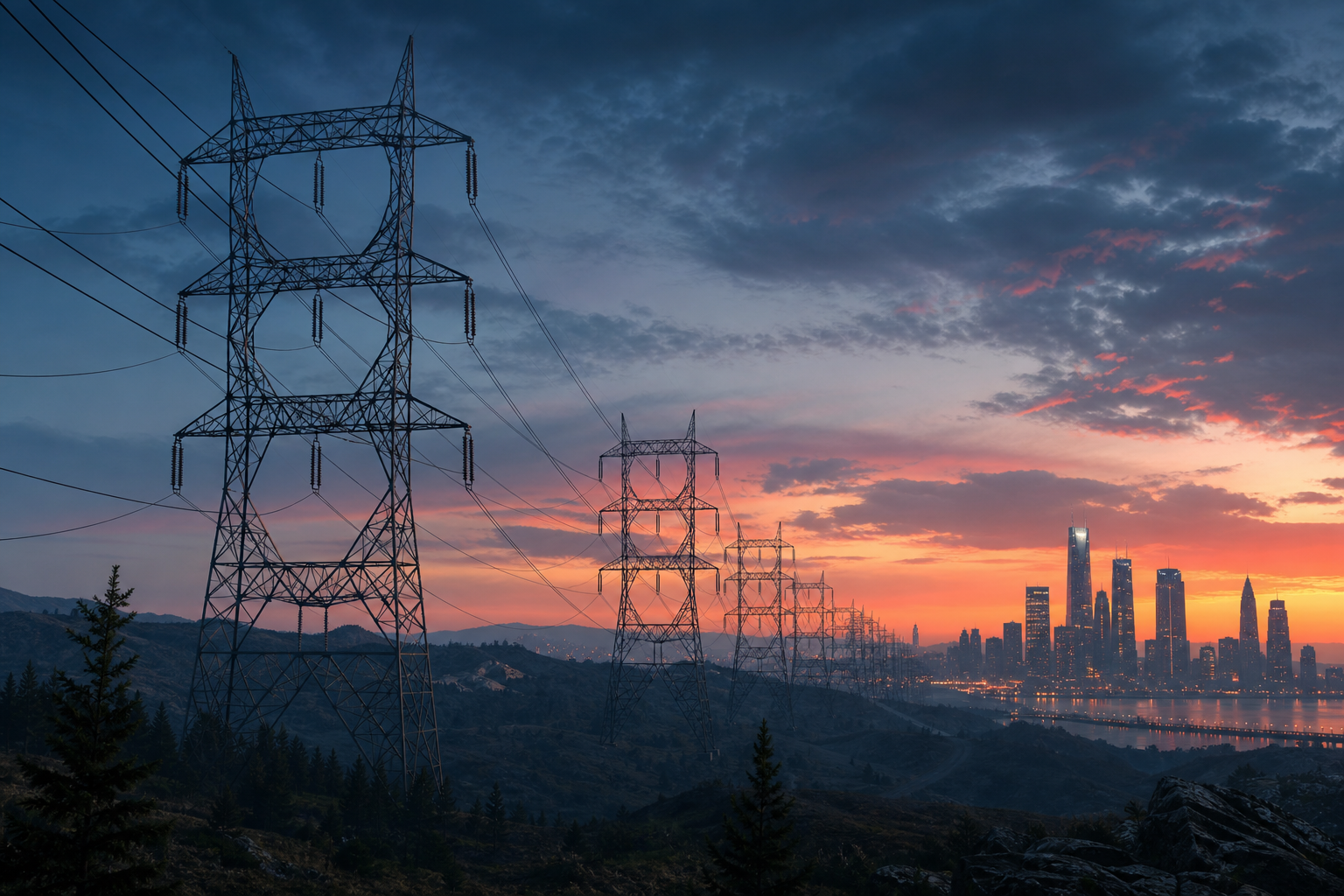
However, an unprecedented structural shift is taking place across the technology landscape. The primary bottleneck limiting the deployment and advancement of large-scale artificial intelligence has officially pivoted from silicon availability to energy capacity. The core limiting factor is no longer how many chips a company can purchase, but how many gigawatts of electricity it can secure to run them. As large language models (LLMs) and generative machine learning architectures continue to scale exponentially, the battle for AI dominance is moving off the chip fabricator floor and onto the high-voltage transmission lines of global power grids.
Who controls reliable, baseload clean energy—and under what commercial terms—will dictate which organizations capture value in the next frontier of artificial intelligence infrastructure. For business leaders, software architects, and technology strategists, understanding this physical constraint is essential for planning future software automation, cloud expenditure, and digital transformation initiatives.
What Happened: The Great Energy Pivot
The transition from chip scarcity to power scarcity happened almost overnight as hyperscalers—such as Microsoft, Amazon Web Services (AWS), Google, and Meta—began building cluster sizes never before seen in modern computing history. While semiconductor supply chains caught up to historic demand, municipal power grids hit a physical wall. Datacenter operators attempting to bring new facilities online were met not with hardware delays, but with multi-year waiting lists simply to connect to regional transmission grids.
In response, major tech companies have begun taking extraordinary, historic measures to lock down energy supplies directly at the source. Over the past year, hyperscalers have aggressively signed direct Power Purchase Agreements (PPAs) with nuclear power plants, geothermal operators, and massive utility-scale solar and wind farms. In one of the most high-profile deals to date, Amazon acquired a 960-megawatt nuclear-powered datacenter campus directly adjacent to Pennsylvania’s Susquehanna Steam Electric Station.
Similarly, Microsoft inked a monumental, 20-year power purchase deal with Constellation Energy to facilitate the reopening of the Crane Clean Energy Center (formerly Three Mile Island Unit 1). Google and Meta have simultaneously announced strategic partnerships to support Small Modular Nuclear Reactors (SMRs) and advanced geothermal projects. This flurry of dealmaking signals a permanent strategic shift: Big Tech is no longer just purchasing cloud infrastructure; they are rapidly becoming hyper-capitalized power brokers buying up utility-scale energy output decades in advance.
Key Details: The Scale of the Power Crunch
To fully grasp why gigawatts have become the new metric of AI infrastructure, one must understand the sheer physics of modern high-performance computing. Historically, traditional cloud datacenters operated on power envelopes measured in tens of megawatts (MW). A 50-megawatt datacenter was once considered a massive enterprise facility capable of serving millions of concurrent web users, driving standard enterprise software workloads, and processing vast database transactions.
Next-generation AI clusters radically redefine those scales. Modern flagship AI training clusters demand hundreds of megawatts today, with several planned facilities exceeding 1 to 2 gigawatts (GW) of continuous capacity. For context, one gigawatt of electricity is equivalent to the output of a standard nuclear power plant or enough energy to power roughly 750,000 to 1,000,000 homes.
The thermal design power (TDP) per individual server rack has exploded. Traditional server racks drew between 5 to 15 kilowatts (kW) of power. In contrast, Nvidia’s latest Blackwell NVL72 architecture draws upwards of 120 kW per single rack enclosure. This dramatic increase in energy density presents two distinct technical bottlenecks:
- Grid Interconnection Delays: Regional transmission operators in North America and Europe currently face grid interconnection queues ranging from four to seven years. In critical tech hubs like Northern Virginia, Silicon Valley, and parts of Western Europe, electrical distribution networks are operating near total capacity, forcing developers to look for alternative geographic sites.
- Baseload Reliability vs. Renewable Intermittency: AI training runs require uninterrupted, steady-state power supplies for months at a time. If a 100,000-GPU training cluster loses power mid-run, billions of parameters stored in memory can be corrupted, leading to costly state recovery processes. Because solar and wind energy are inherently variable, cloud providers are aggressively prioritizing firm, zero-carbon baseload energy—specifically nuclear, geothermal, and advanced natural gas with carbon capture.
Impact on the AI Industry: Power as the New Competitive Moat
This energy constraint fundamentally reshapes the competitive landscape of the artificial intelligence sector, dividing the market into clear winners and losers based on access to power infrastructure.
First, it establishes an immense physical competitive moat for incumbent hyperscalers. Tech companies with multi-billion-dollar balance sheets are uniquely positioned to pre-fund power plants, pay upfront capital costs for grid upgrades, and commit to multi-decade energy contracts. Smaller cloud providers, independent AI research labs, and regional hosting facilities are increasingly squeezed out of high-density capacity because they lack the financial leverage to secure gigawatt-scale power allocations.
Second, the geographic map of the technology industry is being rewritten. Historically, datacenters were built in close proximity to major fiber-optic trunks and metropolitan business centers to minimize network latency. Today, training clusters do not require ultra-low latency; they require abundant, cheap electricity. As a result, massive capital investments are flowing into rural markets, areas near hydroelectric dams, stranded energy sites, and locations with favorable utility frameworks.
Finally, energy constraints are forcing a pricing evolution in public cloud computing. As power companies raise utility rates to fund transmission grid modernizations, those operational costs will inevitably pass through to software companies, enterprise buyers, and API consumers. Compute pricing will increasingly correlate with regional energy spot prices, carbon taxes, and power availability, making runtime optimization a mandatory engineering practice rather than a secondary cost-saving exercise.
What Developers and Businesses Should Know
For software engineering teams, product managers, and enterprise leaders, the power bottleneck carries practical implications for product development, cloud architecture, and cost management. As hardware costs stabilize and power costs rise, software efficiency becomes paramount.
1. Model Efficiency Over Brute Force
The era of solving every machine learning challenge by simply training a larger model is coming to an end. Businesses must adopt smaller, highly specialized models. Distillation techniques, small language models (SLMs), and targeted fine-tuning allow organizations to achieve state-of-the-art performance on specific enterprise tasks at a fraction of the parameter count—and a fraction of the energy consumption.
2. Intelligent Workload Placement and Orchestration
Engineering teams must distinguish between workloads that require instant real-time responses and those that can be executed asynchronously. Batch processing, large-scale model training, and heavy data automation jobs should be designed to run in regions and at times when green energy is abundant and power grids are underutilized. Intelligent orchestration and hybrid-cloud topologies will become essential for keeping operational overhead under control.
3. Edge Computing and Local Inference
As centralized cloud inference costs rise due to datacenter power demands, on-device computing becomes significantly more attractive. Modern consumer hardware—ranging from laptop Neural Processing Units (NPUs) to mobile devices—is increasingly capable of running quantized, highly optimized models locally. Offloading inference from cloud datacenters to end-user edge devices reduces server load, slashes API expenses, lowers latency, and preserves privacy.
4. Pragmatic AI Automation
Companies should evaluate their AI pipelines to eliminate unnecessary call volume. Implementing intelligent caching layers (such as semantic caching for common queries), utilizing traditional programmatic rules where appropriate, and employing multi-tiered model routing (sending simple tasks to cheap, fast models and reserving large models for complex reasoning) directly protects bottom-line margins.
Future Outlook: The Next 6 to 12 Months
Over the next 6 to 12 months, expect the AI infrastructure race to accelerate along several distinct technical and operational vectors:
- Off-Grid "Islanded" Compute Clusters: To bypass grid connection queues that take half a decade, infrastructure developers will increasingly build compute clusters off-grid. These facilities will sit directly behind the meter at power generation sites, utilizing dedicated microgrids to bring compute online years faster than traditional grid-tied operations.
- Algorithmic Efficiency Breakthroughs: AI research labs will place unprecedented emphasis on algorithmic techniques that reduce memory bandwidth and power usage. Expect major breakthroughs in quantization (e.g., FP4 and 2-bit precision formats), sparse architectures, and mixture-of-experts (MoE) models designed specifically to minimize active power consumption during inference.
- Nuclear and Alternative Energy Regulatory Shifts: Governments recognizing AI infrastructure as a matter of national security and economic competitiveness will streamline permitting processes for clean energy projects. Small Modular Reactors (SMRs) and advanced geothermal technologies will see accelerated regulatory reviews and venture funding rounds.
- Tiered API and Infrastructure Pricing: Cloud providers will begin offering variable pricing models linked directly to energy efficiency and time-of-use metrics. Developers who build flexible applications capable of utilizing low-cost, off-peak compute windows will hold a significant margin advantage over competitors running unoptimized, continuous real-time queries.
Conclusion
The bottleneck of the artificial intelligence revolution has officially expanded beyond software algorithms and silicon fabrication. As generative models and autonomous systems integrate deeper into global commerce, the primary constraint defining the pace of technical innovation is physical grid infrastructure and gigawatt-scale clean energy capacity.
The companies that succeed in the next era of technology will not necessarily be those with the largest datasets or the most GPUs, but those that architect their software, systems, and enterprise strategies around energy efficiency and smart infrastructure allocation. By prioritizing pragmatic model selection, intelligent workflow automation, and efficient system design today, businesses can build sustainable, cost-effective AI solutions capable of scaling effortlessly into the future.
Build With Developers of Chicago
If this kind of AI capability matters to your product, you need a team that can actually ship it. Developers of Chicago helps startups and enterprises design, build, and deploy AI-powered software — from custom integrations to full-scale automation systems.
- AI Integration & Automation — Explore our AI services
- Custom Software Development — See our services
- Mobile App Development — Build with us
- Start a Project — Book a call
Based in Chicago. Building for clients everywhere.